
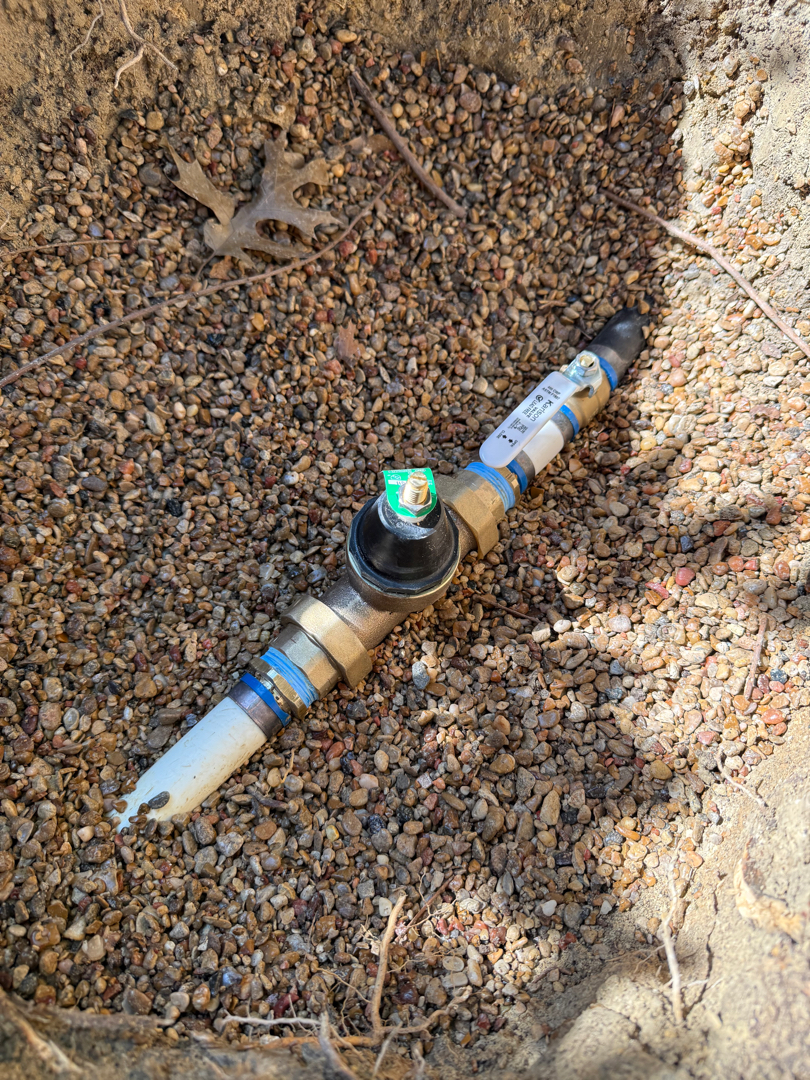
A failed backflow test can create an unexpected problem for homeowners and commercial property owners.
Backflow prevention devices protect drinking water by helping prevent contaminated water from flowing backward into the potable water supply. These devices are commonly installed on irrigation systems, commercial plumbing connections, and other systems where contamination risks may exist.
If your backflow prevention assembly fails testing in McKinney, TX, the next step is to identify the cause, determine whether repair or replacement is needed, and complete any required retesting and documentation.
Blue Otter Plumbing & Drain provides backflow testing, repair, and replacement services.
1. What Is Backflow and Why Does It Matter?
Backflow occurs when water flows in the opposite direction from its intended path. Under certain pressure conditions, contaminated water from irrigation systems, equipment, or other connections may enter a potable water supply.
Backflow prevention assemblies are designed to reduce this risk. For example, an irrigation system may contain fertilizers, pesticides, soil particles, or other substances that should never enter drinking water piping.
A properly functioning backflow prevention device helps protect the public water supply.
2. Why Does a Backflow Preventer Fail Testing?
Several mechanical and environmental conditions can cause a backflow assembly to fail.
1. Worn Internal Components
Internal seals, springs, and other components can deteriorate over time. When these components no longer function correctly, the device may not meet the required testing criteria.
Solution: A qualified backflow professional can inspect the assembly and determine whether internal component repair is appropriate.
2. Debris Inside the Assembly
Sand, sediment, mineral deposits, and other debris can interfere with internal valves. This may prevent the assembly from operating correctly.
Solution: Depending on the manufacturer's instructions and device condition, cleaning or servicing may restore proper operation.
3. Damaged Check Valves
Check valves help control the direction of water movement. If a valve becomes worn, obstructed, or damaged, the assembly may fail testing.
Solution: The professional should identify the failed component and determine whether it can be repaired or requires replacement.
4. Pressure Changes
Pressure fluctuations within a plumbing or irrigation system can affect backflow assembly performance.
Solution: Appropriate testing can help determine whether the assembly is functioning correctly and whether additional system diagnosis is necessary.
5. Freeze Damage
Outdoor backflow assemblies can be vulnerable to freezing temperatures. Water expanding inside the assembly can damage internal components or housing.
Solution: Damaged components may require repair or replacement. Proper winterization can help reduce the risk of future freeze-related problems.
6. Improper Installation
Incorrect installation, unsuitable device selection, or improper assembly orientation can cause operational problems.
Solution: Have the installation reviewed against manufacturer instructions and applicable plumbing and cross-connection requirements.
3. What Happens After a Backflow Test Fails?
If your backflow assembly fails, the appropriate next steps generally include:
- Review the test report
- Identify which component or performance requirement failed
- Determine whether the assembly is repairable
- Complete the necessary repair or replacement
- Arrange retesting when required
- Submit the appropriate documentation to the water authority or municipality
The exact process depends on the device, the testing result, and local requirements. Do not assume that a failed test automatically means the entire assembly needs replacement.
4. How Often Should Backflow Devices Be Tested?
Many water authorities require annual testing for certain backflow prevention assemblies. However, testing requirements depend on the type of assembly, property use, hazard classification, and local authority regulations.
Properties that may require backflow testing include:
- Homes with irrigation systems
- Commercial buildings
- Properties with certain fire protection systems
- Facilities with specialized water connections
- Properties identified by the local water authority as requiring cross-connection protection
If you are unsure whether your property requires testing, contact your local water provider or a qualified backflow professional.
5. What Is an RPZ Backflow Preventer?
An RPZ, or reduced pressure principle assembly, is a type of backflow prevention device used in applications requiring a higher level of protection against backpressure and backsiphonage. It typically includes two independently operating check valves and a relief valve.
RPZ assemblies require proper installation, testing, and maintenance. A failed RPZ test may involve worn components, debris, pressure-related issues, or internal mechanical damage. A qualified tester can determine the cause and recommend the appropriate corrective action.
6. Does a Failed Backflow Test Mean I Need a New Device?
Not always. A device may pass testing after appropriate repair or servicing.
Repair may be practical when:
- The assembly is in good overall condition
- The failed components are replaceable
- Suitable manufacturer-approved parts are available
- The device remains appropriate for the application
Replacement may be necessary when:
- The assembly is severely damaged
- The housing is cracked
- Parts are unavailable
- The device is obsolete or unsuitable
- Repair is not economically practical
A professional evaluation helps determine the correct option.
7. Backflow Testing Services in McKinney, TX
Backflow testing is an important part of protecting drinking water and maintaining compliance where testing is required.
Blue Otter Plumbing & Drain provides backflow testing, inspection, repair, and replacement services for residential and commercial customers. Our services can help property owners address failed tests, evaluate irrigation backflow assemblies, and obtain appropriate testing documentation.
If your backflow device has failed or you received a notice from your water provider, arrange an evaluation before your compliance deadline. Related services: water line repair and inspection.
Need backflow testing or repair in McKinney? Call Blue Otter Plumbing & Drain at (469) 238-2211 to discuss your backflow service needs.
Frequently Asked Questions
What does it mean when a backflow test fails?
A failed test means the assembly did not meet one or more required performance criteria during testing. The test report helps identify the issue and determine whether repair or replacement is necessary.
How much does backflow testing cost in McKinney, TX?
The price depends on the device type, accessibility, number of assemblies, and testing requirements. Request a service estimate for your property. Call us for an estimate.
How often should a backflow preventer be tested?
Many local authorities require annual testing for certain devices. Confirm the schedule with your local water provider or applicable jurisdiction.
Can a backflow preventer be repaired after failing?
Yes. Some failures result from worn or dirty internal components that can be serviced. However, severely damaged or unsuitable assemblies may need replacement.
What happens if I ignore a failed backflow test?
You may remain out of compliance with applicable water authority requirements, potentially resulting in notices, restrictions, or other enforcement measures. Contact your local authority to understand your obligations and deadlines.
What is the difference between backflow testing and backflow repair?
Testing evaluates whether a prevention assembly operates within required performance criteria. Repair corrects identified mechanical or operational problems.
Do residential irrigation systems need backflow testing?
Some irrigation systems require backflow prevention and periodic testing. Requirements depend on local water authority rules and the type of installation.
What is an RPZ valve?
An RPZ is a reduced pressure principle backflow prevention assembly designed to protect potable water systems from certain contamination risks.
Do I receive a backflow test report?
A qualified tester should provide the applicable test results and documentation required for the property and local authority.