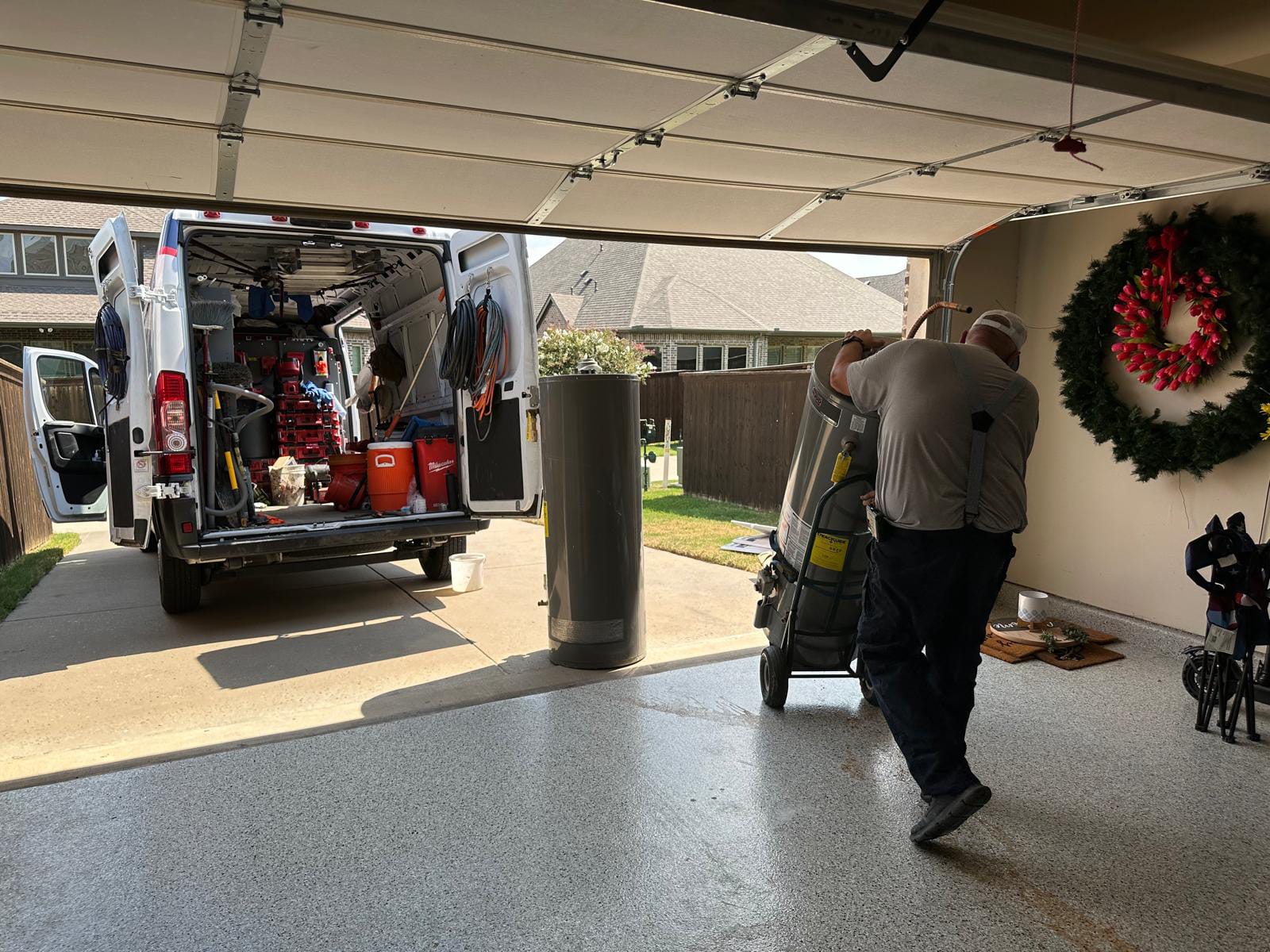
Turning on your shower or kitchen faucet and getting nothing but cold water can quickly disrupt your daily routine.
If your water heater suddenly stops producing hot water, the problem could involve a failed heating element, faulty thermostat, gas supply issue, ignition failure, sediment accumulation, or an aging water heater.
For homeowners in McKinney, TX, understanding these problems can help determine whether a simple repair is possible or whether a complete water heater replacement is more practical.
Blue Otter Plumbing & Drain provides water heater repair, replacement, and maintenance services for traditional tank and tankless systems.
1. Why Is My Water Heater Not Producing Hot Water?
Here are eight common reasons your water heater may stop heating properly.
1. Tripped Circuit Breaker
Electric water heaters depend on electrical power to operate their heating elements and controls. A tripped breaker can interrupt the power supply and leave your home without hot water.
Solution: Check whether the dedicated water heater breaker has tripped. If it trips again, stop resetting it and have an electrician or qualified professional investigate the electrical problem.
2. Faulty Heating Element
Electric tank water heaters generally use upper and lower heating elements to heat stored water. If one or both elements fail, the water may become lukewarm or remain cold.
Solution: A plumber or qualified technician can test the heating elements and replace defective components when appropriate.
3. Malfunctioning Thermostat
A thermostat regulates water temperature inside a traditional water heater. If the thermostat fails or is incorrectly set, the system may not heat water properly.
Solution: Have the thermostat checked and adjusted or replaced if necessary.
4. Pilot Light or Ignition Failure
Gas water heaters require a functioning ignition system to heat water. A pilot light that goes out, a faulty igniter, or a gas supply problem can interrupt heating.
Solution: Have a qualified professional inspect the ignition system and gas supply. Never attempt repairs involving gas connections unless properly qualified. Related: professional gas line repair.
5. Sediment Buildup Inside the Tank
Minerals naturally present in water can settle at the bottom of a traditional water heater tank. As sediment accumulates, it can reduce heating efficiency, cause unusual noises, and affect hot water availability.
Solution: Periodic tank flushing and maintenance can help remove sediment, provided the system is suitable for the procedure.
6. Tankless Water Heater Error Codes
Tankless systems use electronic controls, sensors, burners, and flow monitoring to provide hot water. A malfunctioning sensor, ignition problem, restricted water flow, or mineral buildup can trigger an error code.
Solution: Record the displayed error code and have a technician diagnose the underlying problem. Resetting the unit without addressing the cause may not resolve the issue.
7. Water Heater Tank Leakage
A leaking water heater can indicate a loose connection, defective valve, or internal tank corrosion. A tank that has developed a significant structural leak generally requires replacement rather than a simple repair.
Solution: Turn off the water supply to the unit if it is leaking, avoid contact with electrical components, and arrange professional inspection.
8. Undersized Water Heater
Sometimes the water heater is functioning correctly but cannot meet your household's hot water demand. This can happen when several showers, appliances, and fixtures operate simultaneously.
Solution: A plumber can assess household demand and recommend an appropriately sized tank or tankless system.
2. What Should You Check Before Calling a Plumber?
You can perform a few basic observations without disassembling your water heater.
- Check whether other faucets also lack hot water
- Look for visible leaks around the tank
- Check the electrical breaker without repeatedly resetting it
- Look for an error code on a tankless display
- Notice whether hot water runs out unusually quickly
- Listen for unusual popping or rumbling noises
Do not remove access panels, work on gas connections, or attempt electrical repairs unless qualified.
3. Should You Repair or Replace Your Water Heater?
The right decision depends on the unit's age, condition, repair requirements, and efficiency.
Repair may make sense when:
- The water heater is relatively new
- The tank is not leaking or corroded
- The issue involves a replaceable component
- The repair cost is reasonable compared with replacement
Replacement may make sense when:
- The tank has developed an internal leak
- The unit is approaching the end of its expected service life
- Repairs are becoming frequent
- Major components have failed
- The system no longer meets your household's hot water needs
A professional inspection can help you compare the options. If you need financing help, explore our available plumbing financing options.
4. Tank vs. Tankless: Which Water Heater Is Better?
Both systems can provide dependable hot water when properly sized and maintained.
Traditional Tank Water Heater
- Stores heated water for household use
- Generally has a lower initial installation cost
- Can be a practical replacement when existing connections are suitable
- Has a limited supply of stored hot water
Tankless Water Heater
- Heats water on demand
- Does not store a large volume of hot water
- Can provide continuous hot water within its rated capacity
- Requires appropriate gas, electrical, and venting capacity
- Needs periodic descaling where mineral accumulation is an issue
Your household size, usage patterns, installation requirements, and budget should guide the decision.
5. How Often Should a Water Heater Be Serviced?
Annual maintenance is a useful starting point for many residential systems, although the correct schedule depends on manufacturer recommendations and local water conditions.
Maintenance may include:
- Inspecting valves and connections
- Checking system operation
- Evaluating the anode rod in applicable tank models
- Flushing sediment where appropriate
- Inspecting gas venting and combustion components
- Descaling compatible tankless systems
Regular maintenance can help identify developing problems before they cause unexpected breakdowns.
6. Water Heater Repair in McKinney, TX
When your water heater stops working, you need an accurate diagnosis rather than unnecessary replacements.
Blue Otter Plumbing & Drain provides water heater troubleshooting, repairs, replacement, and maintenance for homeowners in McKinney and surrounding North Texas communities. We work with traditional tank and tankless water heater systems, including gas and electric models.
Whether you are experiencing no hot water, inconsistent temperatures, leaking connections, or tankless error codes, professional diagnosis helps determine the appropriate solution.
Need your hot water restored? Call Blue Otter Plumbing & Drain at (469) 238-2211 to discuss your water heater problem.
Frequently Asked Questions
Why is my water heater suddenly producing cold water?
Possible causes include a tripped breaker, failed heating element, thermostat problem, gas ignition failure, or tankless system malfunction.
How long does it take for a water heater to produce hot water again?
Recovery time varies by unit size, model, fuel type, and the problem being repaired. A technician can provide a better estimate after diagnosing the system.
Why does my water heater run out of hot water quickly?
Sediment accumulation, a failed heating component, an undersized tank, or increased household demand can reduce available hot water.
Is it worth repairing a 10-year-old water heater?
It depends on its condition and the repair required. A leaking or heavily corroded tank generally needs replacement, while a minor component failure may be repairable.
Why does my tankless water heater keep shutting off?
Possible causes include mineral buildup, insufficient water flow, ignition problems, sensor failure, or venting issues.
How much does water heater replacement cost in McKinney, TX?
Pricing depends on tank capacity, fuel type, equipment brand, installation complexity, venting, and code requirements. Request an inspection and written estimate for accurate pricing.
Can hard water damage my water heater?
Mineral deposits can accumulate inside tank and tankless systems, affecting efficiency and maintenance requirements.
Should I turn off my water heater if it is leaking?
If safe, shut off the water supply to the unit. For gas or electric systems, follow the manufacturer's safety instructions and contact a qualified professional. Avoid touching wet electrical components.