Your home's sewer line is responsible for carrying wastewater away from toilets, sinks, showers, and other plumbing fixtures. When this underground pipe becomes blocked or damaged, wastewater may stop flowing correctly. In serious cases, sewage can back up into your home or collect in your yard.
The difficult part is that most sewer line problems develop underground, where homeowners cannot easily see them.
For homeowners in McKinney, TX, recognizing early warning signs and arranging a sewer camera inspection can help identify problems before they become more extensive.
Blue Otter Plumbing & Drain provides sewer diagnostics, camera inspections, and sewer line repair and replacement services.
1. What Are the Warning Signs of a Damaged Sewer Line?
Here are seven signs that may indicate a problem with your main sewer line.
1. Multiple Drains Backing Up
If your kitchen sink, shower, and toilets are experiencing drainage problems around the same time, the issue may be farther down the plumbing system. A blockage in the main sewer line can prevent wastewater from leaving multiple fixtures.
Solution: Stop using affected fixtures and arrange a professional sewer inspection. A camera can help locate the obstruction.
2. Frequent Toilet Clogs
An occasional toilet clog is common. However, repeated toilet backups, especially when other fixtures are affected, may indicate a main sewer line obstruction.
Solution: Avoid repeatedly flushing a backed-up toilet. Have the plumbing system evaluated to determine whether the issue is isolated or involves the main sewer line.
3. Gurgling Sounds From Drains
Gurgling noises can occur when air becomes trapped or displaced by restricted wastewater flow. If your toilet bubbles when a nearby sink drains, or your shower makes unusual sounds after flushing, the drainage system may have a blockage or venting issue.
Solution: Have a plumber inspect the drainage and venting system rather than assuming the issue is simply a clogged fixture.
4. Persistent Sewage Odors
Unpleasant sewage odors around drains, plumbing fixtures, or your yard can indicate a drainage problem. Possible causes include damaged sewer pipes, dry drain traps, blocked vents, or leaking connections.
Solution: Identify the odor location and arrange an inspection. Do not ignore persistent sewage smells.
5. Wet or Unusually Green Areas in the Yard
A leaking underground sewer line may release wastewater into surrounding soil. Possible warning signs include unexplained wet patches, persistent soggy ground, or unusually lush vegetation in one area.
Solution: A professional sewer inspection can help determine whether the problem involves a damaged sewer pipe or another source of water.
6. Slow Drains Throughout the House
One slow sink may indicate a localized clog. Multiple slow fixtures may suggest a larger drainage restriction.
Solution: Have the system evaluated to determine whether the blockage is in a branch drain or the main sewer line.
7. Repeated Sewer Backups
Recurring backups are a particularly important warning sign. The blockage may be caused by tree roots, grease, sediment, pipe misalignment, or structural deterioration.
Solution: A camera inspection can help identify the underlying cause and determine whether cleaning, repair, or replacement is appropriate.
2. What Is a Sewer Camera Inspection?
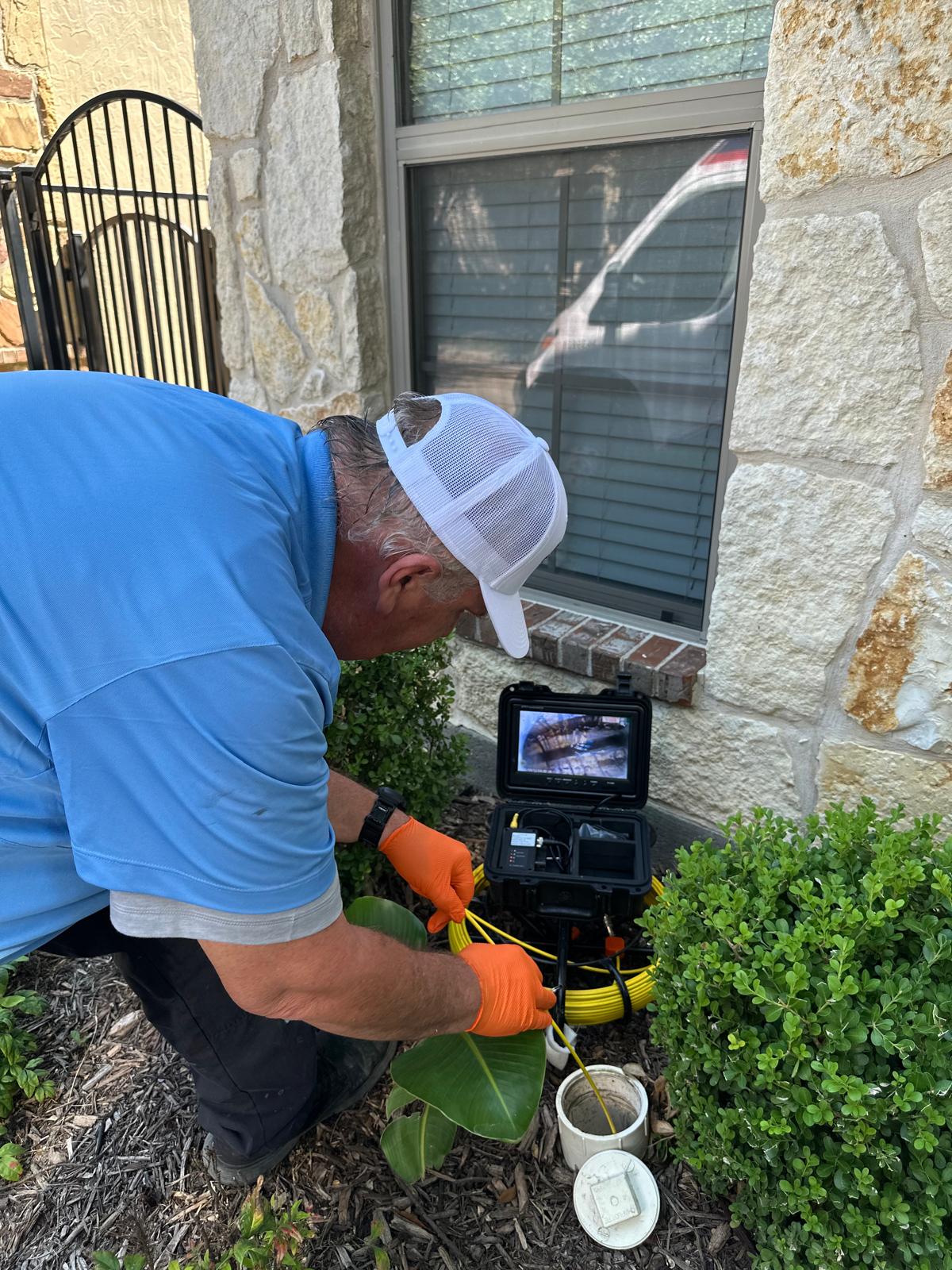
A sewer camera inspection is a diagnostic procedure in which a specialized waterproof camera is inserted into an accessible sewer cleanout or appropriate access point. The camera travels through the pipe and transmits images to a monitor.
This allows the plumber to examine the pipe's interior without immediately excavating the yard. A sewer camera may help identify:
- Tree root intrusion
- Cracked or broken pipe sections
- Grease and debris accumulation
- Pipe separation
- Misaligned joints
- Collapsed pipe sections
- Standing water caused by improper pipe slope
Depending on the equipment and inspection, the plumber may also use a locating device to estimate where the problem is underground.
3. Why Is a Sewer Camera Inspection Better Than Guessing?
Without an inspection, homeowners may spend money repeatedly clearing blockages without understanding why they keep returning.
For example, snaking may temporarily clear a root blockage, but roots can continue growing inside the damaged pipe.
A camera inspection provides visual information that helps a plumber distinguish between:
- A simple obstruction: Cleaning may restore normal drainage.
- Root intrusion: Root removal and evaluation of the damaged pipe may be needed.
- A cracked or separated pipe: Structural repair may be necessary.
- A collapsed sewer section: Replacement of the affected section may be recommended.
The goal is to identify the actual problem before selecting a repair method.
4. Can Tree Roots Damage Sewer Pipes?
Yes. Tree roots can enter sewer pipes through existing cracks, openings, and separated joints. Roots are attracted to moisture, and even a small opening may allow them to penetrate the pipe.
Once inside, roots can grow and trap toilet paper, grease, and other debris. Common warning signs include recurring clogs, slow drainage, and repeated backups.
A camera inspection can help determine whether roots are present and whether the pipe has sustained structural damage.
5. Sewer Line Repair vs. Sewer Line Replacement
Not every damaged sewer pipe requires complete replacement.
Sewer line repair may be suitable when:
- Damage is limited to a small section
- The remaining pipe is structurally sound
- The problem can be accessed and corrected effectively
Sewer line replacement may be appropriate when:
- Several sections are damaged
- The pipe has collapsed
- Corrosion is extensive
- Root intrusion repeatedly returns because of structural deterioration
- The existing system has reached the end of its useful life
A professional assessment helps determine the most appropriate option.
6. Sewer Line Inspection and Repair in McKinney, TX
Sewer problems rarely improve when left untreated. Blue Otter Plumbing & Drain helps homeowners identify sewer line problems through professional diagnostics and camera inspections.
If you are experiencing recurring backups, multiple slow drains, sewer odors, or unexplained wet areas in your yard, arranging an inspection can help establish the cause.
We provide sewer line repair and replacement services for homeowners in McKinney and surrounding North Texas communities.
Suspect a sewer line problem? Call (469) 238-2211 to discuss a sewer inspection with Blue Otter Plumbing & Drain.
Frequently Asked Questions
How do I know if my main sewer line is clogged?
Common signs include multiple slow drains, repeated toilet backups, gurgling sounds, and sewage odors. A camera inspection can help confirm the problem.
What does a sewer camera inspection show?
It can reveal visible obstructions, root intrusion, cracks, pipe separation, corrosion, and certain structural problems inside the sewer line.
Does a sewer camera inspection require digging?
Usually, the camera can be introduced through an accessible cleanout, so an initial inspection generally does not require excavation. Access conditions can vary.
Can tree roots completely block a sewer line?
Yes. Extensive root growth can restrict or completely obstruct wastewater flow.
How often should a sewer line be inspected?
There is no universal inspection schedule for every home. Older pipes, recurring clogs, previous root problems, and a history of backups may justify more frequent inspections.
How much does sewer line repair cost in McKinney, TX?
Costs depend on the location, depth, length, pipe material, accessibility, and extent of damage. A camera inspection and written estimate can help establish the required work.
Can a damaged sewer line be repaired without replacing the entire pipe?
Sometimes. Isolated damage may be repairable, while extensive deterioration or multiple failed sections may require replacement.
What should I do if sewage backs up into my home?
Stop using affected plumbing fixtures, keep people and pets away from contaminated areas, and arrange professional plumbing assistance promptly. Sewage cleanup may require specialized remediation.